"It was just a dog."
If you've lost a pet, there's a good chance someone said this to you. Maybe they meant it kindly. Maybe they were genuinely confused by the intensity of what you were feeling. Maybe they said it to themselves, wondering why they were so undone by the loss of an animal when they'd held it together at harder funerals.
The phrase is wrong, but it persists — because our culture hasn't yet built proper infrastructure around pet grief. We have rituals for human death. Funerals, wakes, shiva, memorial services. We have language for it. We have bereavement leave (in most countries, for human relatives). We have social scripts: what to say, what to bring, how long the mourning period is supposed to last.
For pet loss, we have almost none of that.
And the result is that people grieve some of the most significant relationships of their lives largely alone, quietly, and with a persistent background feeling that they're overreacting.
They're not.
What the Research Actually Says
The psychology of pet grief has been studied seriously since at least the early 1980s. Psychologist John Archer of the University of Central Lancashire has published some of the most widely cited work on the subject, documenting grief responses in bereaved pet owners that mirror those seen after the loss of close human relationships — including extended depression, disrupted sleep, and difficulty functioning in daily life. The findings have held consistent across four decades of subsequent research: losing a pet can cause grief as intense as losing a human family member, and in some cases more disruptive.
This isn't sentimentality. It's neuroscience.
The brain doesn't grade relationships by species. It forms attachments based on proximity, routine, physical touch, and the reliable provision of comfort. Dogs and cats satisfy all of these conditions — often more consistently than the humans in our lives. They're present every day. They're physically close. They don't have bad days that make them difficult to be around. They offer comfort without agenda.
When that relationship ends abruptly — which most pet deaths feel like, regardless of whether they were expected — the brain registers the loss through the same neural pathways as any significant bereavement. A 2014 neuroimaging study published in PLOS ONE found that mothers viewing photographs of their dogs showed activation in the same bonding and reward regions of the brain as when viewing photographs of their own children — suggesting that the neural substrate of the attachment is not qualitatively different across species. The fact that the lost being had four legs is neurologically irrelevant.
The Disenfranchised Grief Problem
Psychologists have a term for the grief that society doesn't officially recognise: disenfranchised grief. The concept was introduced by grief researcher Kenneth Doka in his 1989 work Disenfranchised Grief: Recognizing Hidden Sorrow — a text that has since become standard reading in grief counselling training — to describe precisely this situation.
It's the grief you feel for a pregnancy loss that happened early. For a friend who died before you'd grown close. For a relationship that was never publicly acknowledged. For a pet.
The term matters because disenfranchised grief tends to be more difficult to process, not less. When your grief isn't socially sanctioned, you don't get the rituals and support systems that help people move through loss. You're expected to manage it privately and quickly. This often results in grief that goes unprocessed and surfaces later in less expected ways — as depression, as irritability, as a persistent low-level sadness that's hard to name.
The person who says "I'm fine, it was just a dog, I'm over it" is often not fine.
What's Changing in 2026
The cultural tide is shifting — slowly, but visibly.
Cornell University's College of Veterinary Medicine launched a virtual pet loss support group in 2024, led by the hospital's first-ever veterinary social worker. The programme was created in direct response to the number of pet owners who, after a difficult diagnosis or a loss, had nowhere to turn. Participants consistently reported that being in a room — even a virtual one — with people who understood the loss as real was transformative.
Weekly and monthly pet loss support groups now operate on platforms like Meetup across most major cities and online, with dedicated communities available around the clock. The biggest ones explicitly acknowledge what many participants have found hard to say: that this grief is real, raw, and beautiful, and that it is often dismissed in ways that make it harder to carry.
Workplace policies are beginning to catch up in some industries — a small but growing number of employers offer bereavement leave for pet deaths. This is still exceptional rather than standard, but it represents a significant shift in how the relationship is being officially categorised.
Rainbow Bridge Remembrance Day — observed annually on August 28th — has grown steadily as a day when pet owners share memories, light candles, and acknowledge animals who have died. No institution created or maintains it. It persists because it meets a genuine need.
Why It Hits So Hard (Specifically)
Beyond the general psychology of attachment, a few specific features of the pet relationship tend to make the loss particularly acute.
The daily rhythm. A dog or cat is woven into the structure of your day in ways that most human relationships aren't. Morning walks. Mealtimes. The specific weight of them on a specific part of the sofa. When they're gone, the day keeps producing their absence, over and over, in ways that feel almost designed to remind you.
The unconditional quality. Pets don't have complicated feelings about you. They don't carry resentments or have their own needs that sometimes conflict with yours in difficult ways. The relationship is, in a sense, simple — and that simplicity is part of what makes it so restorative. Losing it removes something that had no complications.
The witness. Pets are often present for the most private parts of life. Crying in the kitchen at midnight. Working from home through a difficult year. Recovering from illness. They witness things that we don't share with other people, and they hold that witnessing without judgment. When they die, that witness is gone, and there's no human equivalent who can take its place.
The decision. Many pet deaths involve euthanasia — a decision you make, often in consultation with a vet, in a very short window of time. The burden of that decision, even when it's made with love and from necessity, can produce grief that's complicated by guilt in ways that few other losses are.
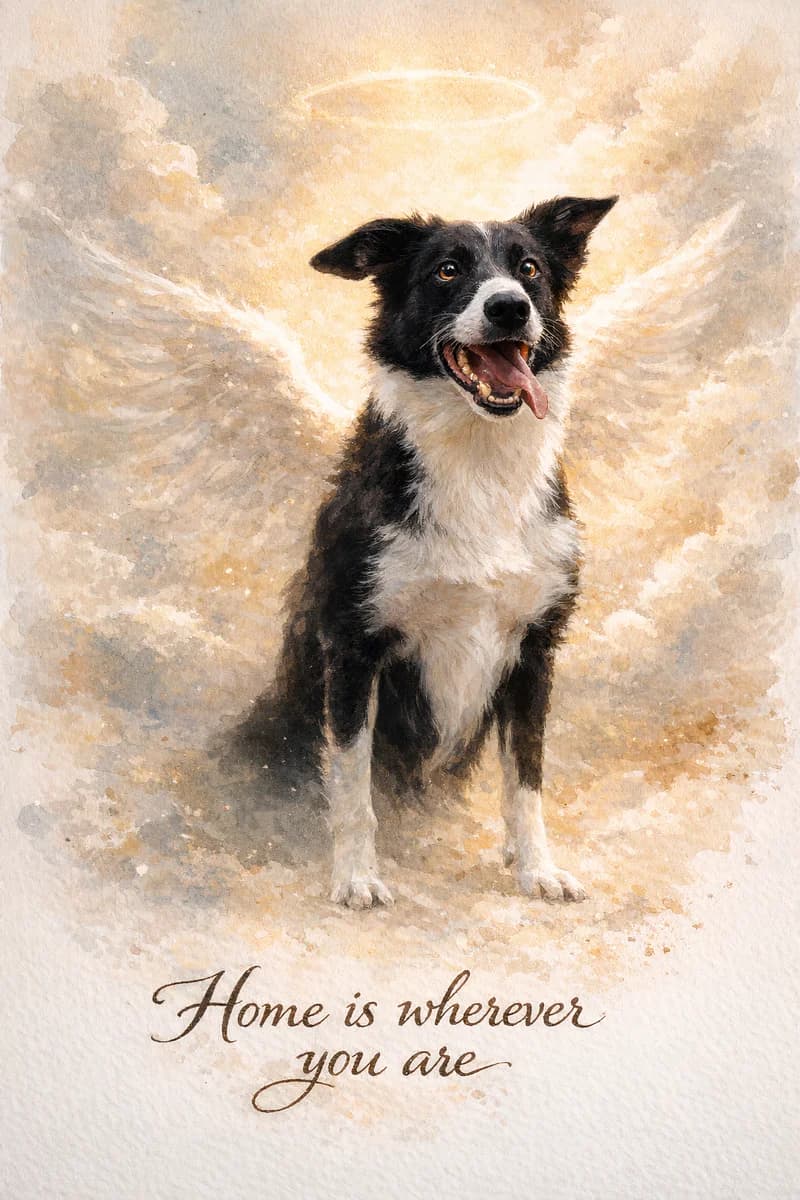 A quiet morning scene — the particular silence of a home that's missing someone
What Actually Helps
There's no shortcut through grief. But there are things that help.
Letting it be real. The single most useful thing, according to both researchers and support group facilitators, is simply being allowed to grieve — not rushing it, not minimising it, not apologising for it. This is harder than it sounds in a culture that expects emotional efficiency.
Rituals. Human grief is helped enormously by ritual — the actions that acknowledge that something has ended and that the ending matters. Pet grief benefits from the same, but we don't have established ones. Creating your own ritual matters: a walk to a meaningful place, planting something, gathering to share memories with someone who knew the animal.
Community. Finding people who understand is genuinely therapeutic. Online support communities (Rainbow Bridge, PetLossCommunity.com, Reddit's r/Petloss) exist specifically because the people around you may not have the capacity to hold this grief — not out of cruelty, but because they haven't had the same loss.
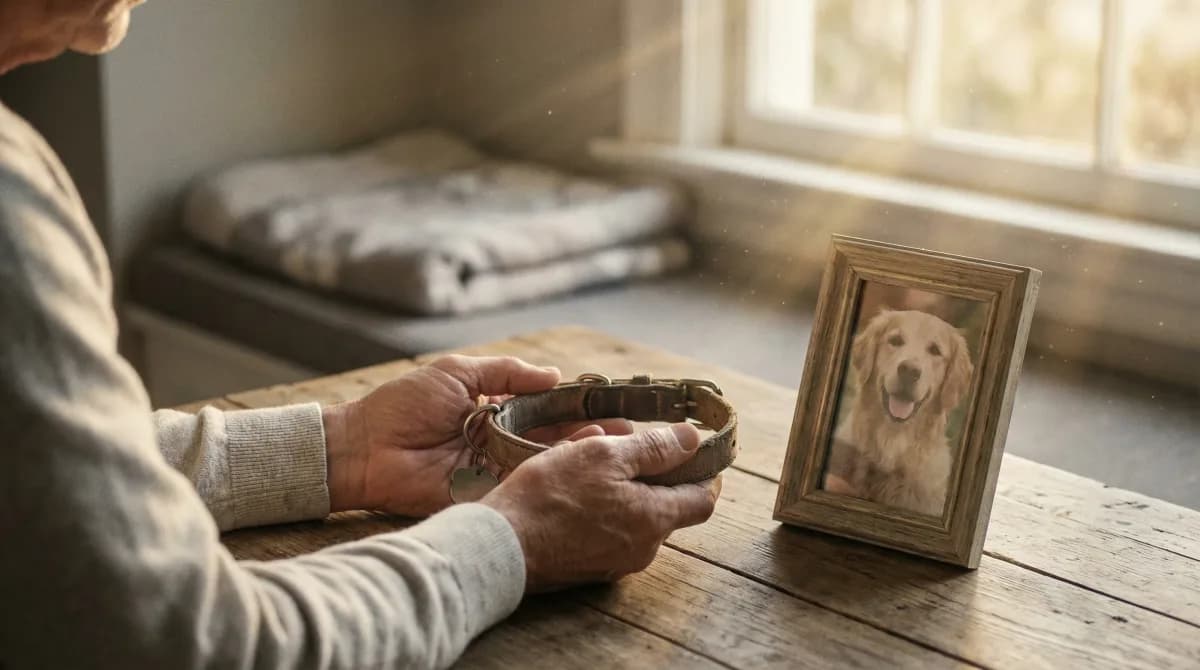
A physical memorial. Something you can look at. Not to replace the animal, not to stop the grief, but to mark the fact that the relationship existed and mattered. A photograph is somewhere between a memory and an object — it doesn't quite fill the need. A portrait is different: it's something made, something with weight, something that says I chose to honour this.
A Note on Timing
People often ask, with some shame, when it's appropriate to create a memorial portrait. Whether it's too soon — whether ordering something feels unseemly when the grief is fresh.
There's no correct answer, but our experience is that people tend to find it helpful at two different points:
Very soon after the loss, when the impulse is strong and the need to do something — anything — with the grief is acute. The act of creating becomes part of the first processing.
Weeks or months later, when the initial wave has subsided and the desire to do something lasting and beautiful emerges more deliberately.
Both are right. Neither is too soon. The grief doesn't have an official start time, and neither does the memorial.
At petportraitgift.com/memorial, we've tried to create an experience that feels appropriate to both moments — unhurried, gentle, with no pressure to purchase. You upload a photo. You choose a style. You see the portrait generated, free, before any decision is made. If it doesn't look right or feel right, you walk away.
If it does: you have something lasting to show for a relationship that deserved to be commemorated.
👉 Create a memorial portrait — free, no commitment →
To Anyone Reading This Who Is Grieving Right Now
It wasn't "just" anything.
The relationship you had was real. The loss you're feeling is proportionate to what you lost. You don't need to minimise it to make other people more comfortable.
Grief is the price of attachment. The fact that you're paying it says something true about what the animal meant to you.
That's worth honouring.
petportraitgift creates memorial portraits in the Heaven, Blossoms and Watercolour styles. Gentle, unhurried, free to preview. See the memorial collection →